Air purifiers work best when positioned strategically, placement determines how effectively they clean the air you breathe. Many homeowners buy a quality air purifier, plug it in, and wonder why they’re not seeing results. The problem? They’ve put it in the wrong spot. Where you place your air purifier matters just as much as which model you buy. A unit tucked in a corner near furniture, a wall, or a closed door won’t circulate air efficiently through your home. This guide walks you through the best placement strategies for every room, helping you maximize your air purifier’s performance and actually breathe cleaner air.
Table of Contents
ToggleKey Takeaways
- Where to place an air purifier matters as much as the model itself—position it in the center of the room or away from walls and furniture for maximum intake and air circulation effectiveness.
- Keep your air purifier 1 to 3 feet off the floor on a shelf or stand, and maintain at least a foot of clearance from walls to ensure unobstructed airflow on all sides.
- Place air purifiers near air intake points like windows and doors (3 to 6 feet away) to intercept outside pollutants before they spread throughout the room.
- In bedrooms, position the purifier 3 to 6 feet from your bed on a nightstand or dresser to target the breathing zone while allowing proper air circulation.
- In kitchens and bathrooms, avoid placing air purifiers near stoves or showers where moisture and grease will quickly clog filters; use exhaust fans instead for more efficient pollution removal.
- Using one purifier for an entire home is ineffective—deploy multiple units in separate rooms since air circulation doesn’t travel well through closed doors.
Best Locations For Air Purifier Placement
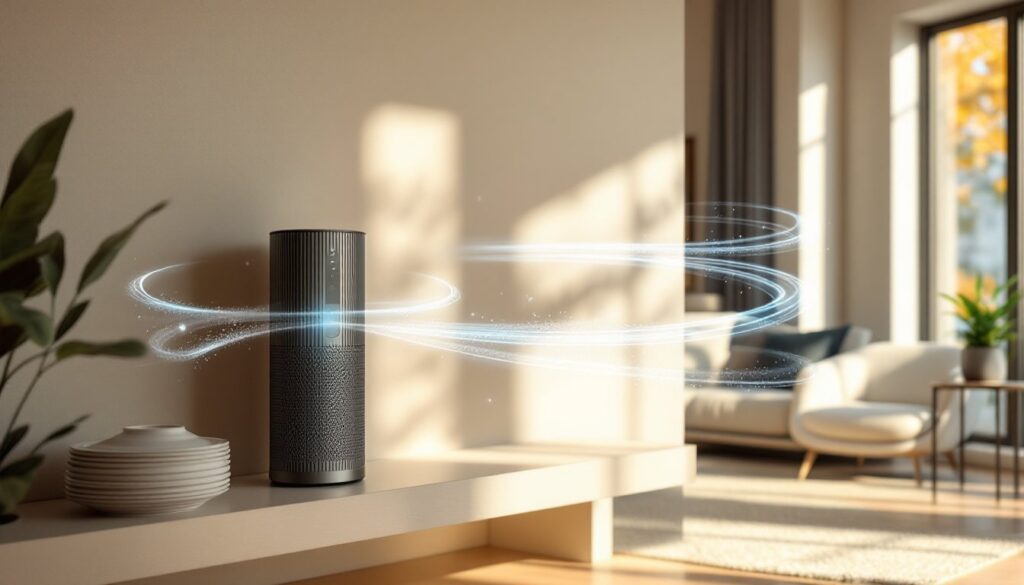
The foundation of effective air purification is understanding how air moves through a space. Your air purifier pulls in contaminated air, filters it, and pushes clean air back out. That cycle only works if the unit has clear access to surrounding air and can circulate that air throughout the room.
Center Of The Room
Placing your air purifier in the center of a room, or at least away from walls and large furniture, gives it maximum intake and output freedom. Think of it like a speaker: blocking one side mutes the sound. Your purifier needs unobstructed intake on all sides and clear space for filtered air to travel. A unit sitting in the middle of a bedroom or living room achieves the best air mixing. Height matters too. Keeping the purifier roughly 1 to 3 feet off the floor (elevated on a shelf or stand) is better than placing it directly on carpet, where intake can be limited and dust can settle on the intake vents. If your purifier has a control panel or display on top, make sure you can still reach it comfortably from that height.
One practical note: if your room layout won’t allow dead-center placement, aim for the most open spot you’ve got. An air purifier in a corner is far less effective than one positioned even 2 feet away from walls.
Near Air Intake Points
Air intake points, windows, doors, and HVAC vents, are where fresh air and outside pollutants enter your home. Placing your purifier near these sources lets it intercept contaminants before they spread throughout the room. A bedroom window that stays cracked open at night? Position your purifier a few feet away to catch that incoming air. A living room with a door that opens to a busy street? Same logic applies.
Note that “near” doesn’t mean directly blocking the source. You want your purifier close enough to catch polluted air but far enough away that it’s not fighting the incoming air stream. If you place it too close to an open window or door, it’ll pull in more outside air than it can filter. Aim for 3 to 6 feet away from active intake points, depending on your room size and the purifier’s coverage area (measured in Clean Air Delivery Rate, or CADR).
Air Purifier Placement In Bedrooms
Bedrooms are prime real estate for air purifiers because you spend roughly a third of your day there, breathing in whatever’s in that air. Dust mites, allergens from outside, pet dander if you have furry roommates, and volatile organic compounds (VOCs) from mattress off-gassing or furniture all accumulate while you sleep.
The ideal bedroom spot is on a nightstand or low shelf positioned 3 to 6 feet away from the bed, far enough that air circulates around you but close enough to target the breathing zone. If a nightstand isn’t practical, a dresser across the room works too. Avoid placing the purifier directly under a window or on the floor behind the bed, where it can’t move air effectively through the sleeping area.
If you’re using the purifier primarily while sleeping, a timer setting on compatible models helps you save energy during the day. Better yet, run it for 30 minutes before bed to “pre-clean” the air, then leave it running on a lower speed during sleep. Bedroom noise matters here, some units run quieter than others, so if light sleep is a problem for you, check decibel ratings when shopping. A purifier pulling warm air across your bed from just 3 feet away will also feel like gentle circulation, which some people find soothing.
For allergy sufferers sharing a bed with someone without allergies, this becomes tricky. Positioning the unit closer to the allergy-prone sleeper’s side of the bed helps, but true individual air zones require separate units. If budget allows, it’s worth considering.
Living Room And Open Spaces
Open-concept living areas, where the living room, kitchen, and dining space flow together, demand a different approach than closed bedrooms. Air purifiers work best in defined spaces with contained air movement. In a large open room, place your unit in the most-used gathering zone, typically where people sit and spend the most time.
In a typical living room layout, that’s often the center of the seating area or along a side wall roughly equidistant from seating and high-traffic zones. Avoid hiding the unit behind a sofa or in a corner entertainment center. Those spots starve the intake and can make the filtered air feel stale because it’s recirculating only that isolated pocket.
If your open space is genuinely large (over 400 square feet), consider that a single unit might not cover everything effectively. Most residential air purifiers list a recommended square footage on the spec sheet, some handle up to 400 square feet, while others are designed for smaller spaces. Cramming an undersized unit into a huge room is worse than having none at all. Recent smart home technology, which helps manage air quality across larger homes. Alternatively, position a single unit where the family spends the most evenings and accept that other zones will benefit secondarily from air circulation.
For open spaces with multiple zones (a sunken living room that steps down to a dining area, for example), placing the purifier in the higher traffic zone keeps the most-used air cleaner, even if kitchen pollutants drift toward less-filtered areas.
Kitchen And Bathroom Considerations
Kitchens are pollution factories, cooking releases particulates, VOCs from oil and gas, and moisture that can encourage mold growth. Yet kitchens are also the worst places for standard air purifiers, because moisture and grease will clog filters quickly. If you run your stovetop without a range hood and place an air purifier nearby, you’re looking at filter replacements every 2 to 4 weeks instead of 6 to 12 months.
The honest answer: if your kitchen has a functioning range hood, use it. Always. A range hood vents cooking pollution directly outside, which beats any air purifier in the room. If you don’t have a range hood or yours isn’t powerful enough, position a purifier as far from the stove as possible, opposite wall or an adjoining dining area, and accept that it’ll work overtime. Run it on high speed while cooking and for 30 minutes afterward. Washable pre-filters help extend filter life in this environment.
Bathrooms are similar trouble zones. Shower steam creates moisture that clogs filters, and if anyone in your home has mold sensitivities, a damp bathroom is the last place to run an air purifier (moisture will degrade filters and promote mold inside the unit itself). The better play: run your bathroom exhaust fan during and for 30 minutes after showers. If you’re determined to use a purifier in a bathroom, position it far from the shower and ensure it gets cleaned and dried thoroughly if moisture is visible.
Digital Trends has covered, which is a smarter solution than cramming a purifier into a high-humidity space.
Common Placement Mistakes To Avoid
Hiding it behind furniture or in a corner. This is the most common setup mistake. People don’t want a purifier visible, so they tuck it behind a sofa, under a desk, or in a corner. That immediately cuts intake by 50 to 75 percent, depending on how enclosed the spot is. Your purifier needs to “see” the whole room.
Placing it directly against a wall. Even a few inches away from a wall is better than flush against one. A unit pressed against drywall can’t pull air in from that side. Give it at least a foot of clearance, ideally more.
Mounting it high or low extremes. Ceiling-mounted units might look sleek, but they can’t capture ground-level dust, pet dander, and skin cells that settle near floors and furniture. Floor placement is better than ceiling, but a low shelf (3 feet up) balances accessibility with proper air mixing.
Ignoring filter saturation. Placement is useless if your filter is clogged. Check your filter monthly (hold it up to light, if you can’t see through it, replace it). A dirty filter turns your purifier into a expensive paperweight and can actually circulate stale air.
Using one purifier for a whole home. Unless your house is small and open, one unit can’t clean multiple separate rooms effectively. Air doesn’t travel well through closed doors. Good Housekeeping’s 2026 air, especially in homes with dedicated bedrooms, offices, and living spaces.
Running it 24/7 unnecessarily. Modern purifiers are efficient, but continuous operation wears out filters faster and uses energy. Run it on high speed during the day or when pollution is likely (cooking, opening windows on high-pollen days), then drop to a low or medium setting overnight. A timer helps automate this without forethought.