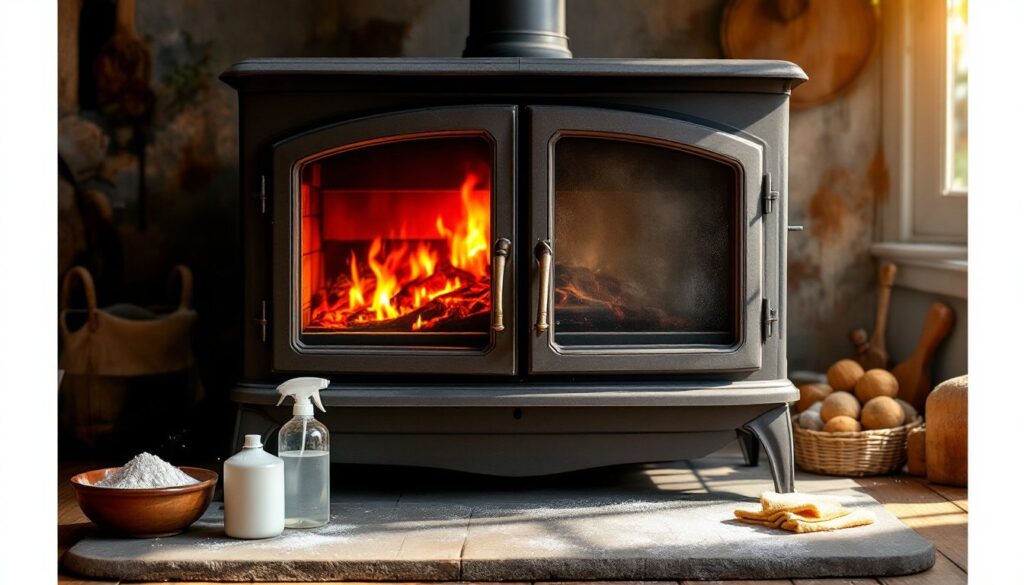
A wood stove is only as inviting as the view through it. When creosote buildup, ash, and soot cloud the glass doors, you lose both the ambiance and the ability to monitor your fire safely. Whether you’re running a cast-iron beauty in your living room or heating your entire home, keeping that glass pristine matters. This guide covers everything from commercial wood stove glass cleaners to proven DIY methods, plus the habits that prevent excessive buildup so you spend less time scrubbing and more time enjoying the warmth.
Table of Contents
ToggleKey Takeaways
- Wood stove glass gets dirty from creosote buildup, ash, and soot caused by incomplete combustion, especially when burning wet wood or experiencing poor chimney draft.
- Commercial wood stove glass cleaners with creosote-specific formulas work best—apply to cooled glass for 10–15 minutes, then wipe clean with a damp cloth.
- Effective DIY alternatives include ash-and-water paste, vinegar-and-baking-soda solutions, and rubbing alcohol, which are budget-friendly and gentle on tempered glass.
- Clean wood stove glass weekly with light maintenance and deep clean every 2–4 weeks, always ensuring the stove has cooled completely before applying any cleaner.
- Prevent excessive buildup by burning only dry, seasoned wood (below 20% moisture), maintaining proper chimney draft, and keeping glass doors fully closed during operation.
- A quick wipe-down immediately after the stove cools prevents ash from hardening and saves hours of scrubbing later in the season.
Why Wood Stove Glass Gets Dirty and Cloudy
Wood stove glass doesn’t stay clear by accident. The culprit is creosote, a sticky byproduct of incomplete combustion that condenses on cool surfaces, especially the glass doors. When your wood is wet, your chimney temperature drops, or your firebox isn’t drawing air properly, creosote production spikes. Ash and soot pile on top, creating a haze that worsens over a heating season.
Temperature cycling matters too. Every time the stove cools after a burn cycle, moisture in the air condenses on the glass, carrying microscopic ash particles with it. Over weeks, these layers build into a stubborn, opaque coating. Even hardwoods that burn “cleaner” than softwoods will still leave deposits on the glass. The good news: knowing the cause tells you half the battle is prevention, not just cleanup.
The Best Commercial Glass Cleaners for Wood Stoves
Not all glass cleaners are created equal when it comes to wood stove doors. Regular window cleaner won’t cut through baked-on creosote, and abrasive powders can scratch tempered glass. Look for products specifically labeled for wood stove, fireplace, or high-heat glass.
Creosote-Specific Formulas: These are designed to break down the chemical bonds in creosote without requiring heavy scrubbing. Many work best on warm (not hot) glass. Apply, let sit for 10–15 minutes, then wipe with a damp cloth. Brands like Rutland and Kona are tested recommendations from Good Housekeeping’s guide to home appliances, though always check the label for safety with your specific stove model.
Spray vs. Paste: Sprays offer convenience and even coverage: pastes give you more control and often contain mild abrasives (like pumice powder) that remove stubborn residue gently. Pastes tend to work better on heavily soiled glass but require more elbow grease.
Safety Note: Never apply cleaner to hot glass, it can damage the coating and create fumes. Wait until the stove cools, or clean when you’re not actively burning.
DIY Natural Cleaning Solutions That Actually Work
Commercial cleaners work, but budget-friendly DIY solutions handle most buildup just as well. The key is using the right abrasive, something gentle enough not to scratch tempered glass.
Ash and Water Paste: Save the ash from your stove. Mix with a small amount of water to form a spreadable paste. Ash is mildly abrasive and won’t harm the glass. Apply with a soft cloth, let sit for 5 minutes, then wipe away with a damp cloth. This works surprisingly well for light to moderate buildup.
Vinegar and Baking Soda: Spray white vinegar on the cooled glass, then sprinkle baking soda to create a fizzing reaction. The foam lifts debris. After 10 minutes, scrub gently with a soft sponge or cloth, then rinse. This combination is less aggressive than commercial creosote removers but ideal for weekly maintenance.
Newspaper and Damp Cloth: For light ash deposits, dampen a cloth with water, dip it in the ash from your stove (or fireplace), and buff the glass. Crumpled newspaper works as your gentle abrasive and won’t scratch. This old trick works because ash itself is what’s causing the haze, using it as an abrasive is counterintuitive but effective.
Rubbing Alcohol: Pour rubbing alcohol (70% isopropyl) onto a lint-free cloth and wipe. It evaporates quickly and leaves no residue. It won’t remove heavy creosote alone but keeps glass clearer between deep cleans. The Spruce offers tested cleaning tips that include this method for regular maintenance.
Step-by-Step Cleaning Instructions
Follow this process for best results, regardless of your chosen cleaning method:
1. Let the Stove Cool Completely. Never clean hot glass. Allow at least 30 minutes after the last burn, preferably longer. This prevents thermal shock, fume release, and burns.
2. Remove Loose Debris. Use a dry brush or cloth to brush away loose ash and soot. This step prevents you from grinding grit into the glass during wet cleaning.
3. Apply Your Cleaner. Whether commercial or homemade, apply evenly across the glass. For paste, spread with your finger or a brush: for spray, coat the entire door. Let it sit as directed (usually 5–15 minutes). This gives the solution time to break down buildup.
4. Scrub Gently in Circular Motions. Use a soft cloth, sponge, or non-scratch scrubbing pad. Avoid steel wool, scouring powders with harsh grit, or anything that could scratch tempered glass. Apply moderate pressure, let the cleaner do the work.
5. Wipe Away Residue. Use a damp cloth to rinse the glass thoroughly. Repeat with a dry cloth to prevent streaking. For stubborn buildup, repeat the entire process: don’t increase pressure.
6. Buff Dry. A final pass with newspaper or a lint-free cloth leaves the glass streak-free and clear. Real Simple’s home organization guides emphasize this finishing step for polished results.
Frequency: Clean lightly (ash and water) weekly if you’re burning daily. Deep clean (commercial cleaner or vinegar) every 2–4 weeks depending on wood quality and burn efficiency.
Prevention Tips to Reduce Buildup
The best way to keep your glass clear is to minimize what deposits on it in the first place.
Burn Dry Wood Only. Moisture in wood causes incomplete combustion, which produces excess creosote. Season firewood for at least 6–12 months (ideally indoors for the last month before use). Kiln-dried or certified dry wood (moisture content below 20%) burns hotter and cleaner, leaving less residue on the glass.
Ensure Proper Draft. A stove that draws well burns more completely and produces less creosote. Have your chimney inspected annually and cleaned before heating season. Blockages or poor draw are common culprits behind excessive glass buildup.
Use the Right Stove Temperature. Don’t let your wood stove run ice-cold for extended periods. A stove operating below 200°F in the firebox allows creosote to condense on cooler surfaces like the glass. Short, hotter burns are better than long, smoldering ones, though always follow your stove’s manual for safe operating ranges.
Keep Glass Doors Fully Closed. Open doors let room air enter, cooling the glass and encouraging condensation and creosote deposition. Close them fully during burning and when not in use.
Clean Between Burns. A quick wipe with a damp cloth immediately after the stove cools (or the next morning) prevents ash from hardening overnight. This five-minute habit saves you hours of scrubbing later.
Conclusion
Keeping wood stove glass clear comes down to two strategies: removing buildup when it appears and preventing excessive deposits from forming. Whether you choose commercial cleaners or budget-friendly DIY methods, the process is straightforward and requires only basic household supplies. Dry wood, proper draft, and routine cleaning keep the view, and the comfort, alive all winter long.