Phoenix’s intense heat and sun exposure take a toll on windows faster than in cooler climates. Whether you’re dealing with single-pane windows from the 1980s or newer vinyl that’s started to fog up, window replacement is one of those home improvements that pays dividends. This guide walks you through why Phoenix homeowners should consider upgrading their windows, what to look for, and what the replacement process actually involves, without the sales pitch or jargon overload.
Table of Contents
ToggleKey Takeaways
- Window replacement in Phoenix can reduce cooling costs by 10–15% through Energy Star-rated low-E windows that reflect infrared radiation, paying for itself within 7–10 years.
- Look for windows with a Solar Heat Gain Coefficient (SHGC) of 0.30 or lower and a U-factor of 0.30 or less to effectively block Phoenix’s intense desert heat.
- Vinyl windows offer the most affordable option at $200–$400 per window, while fiberglass ($400–$700) and wood-clad options ($600–$1,200+) provide greater durability against temperature extremes.
- Clear signs your Phoenix home needs window replacement include visible air leaks, cracked frames, difficulty opening or closing, and condensation inside the panes—not cosmetic fogging alone.
- Professional window replacement takes 1–3 hours per window with proper preparation, including careful measurement and inspection for water damage, ensuring decades of reliable performance.
- Maintain your new windows twice yearly by cleaning with mild soap, checking weatherstripping and caulk annually, and keeping weep holes clear to prevent frame rot and seal failure.
Why Phoenix Homeowners Should Consider Window Replacement
Phoenix summers routinely hit 110°F or higher, and that sustained heat is brutal on windows. Single-pane and older dual-pane windows let heat transfer straight through the glass, forcing your air conditioning to work overtime. New low-emissivity (low-E) windows reflect infrared radiation while allowing visible light through, keeping your interior cooler without darkening your home.
Beyond comfort, there’s the money angle. A window that leaks air or allows radiant heat to pour in can add $20–$50 monthly to your cooling bill during peak months. Over a decade, that’s $2,400–$6,000 in wasted energy. Modern Energy Star–rated windows can reduce cooling costs by 10–15% depending on your current setup and orientation.
Arizona doesn’t require permits for window replacement in most residential cases, but always check with your local city or county. If your home is in a historic district or if you’re changing the size or frame of openings, permits may apply. It’s worth a quick call to confirm.
Signs Your Windows Need Replacement
Not every window problem means replacement. A foggy seal between panes typically means the window is old or manufactured poorly, but cosmetic fogging alone doesn’t justify $300–$600 per window. But, a few clear signs point toward replacement:
Visible air leaks or drafts are a red flag. On a hot Phoenix afternoon, feel the frame or sill with your hand, if you sense cool air escaping, your conditioned air is bleeding out. Cracked, chipped, or corroded frames weaken the window’s integrity and allow water infiltration, especially during monsoons. Difficulty opening or closing indicates frame warping or broken hardware: for older windows, sometimes just replacing the sash and hardware works, but it’s usually a band-aid.
Condensation inside the frame or on sills suggests seal failure. And if you notice noise from outside, traffic, neighbors, newer windows with laminated or insulated glass improve sound dampening noticeably.
Energy Efficiency and Cost Savings
Energy savings are often the main driver. The average window replacement cost for standard vinyl units up to $1,000–$1,500+ for premium fiberglass or wood-clad options. Payback periods vary, in Phoenix’s climate, you’ll typically recoup costs through energy savings within 7–10 years, assuming consistent cooling demand and no major rate changes.
Look for the Energy Star label and NFRC (National Fenestration Rating Council) ratings. The Solar Heat Gain Coefficient (SHGC) matters most in Phoenix: aim for 0.30 or lower to block solar heat. The U-factor (measuring heat transmission) should be 0.30 or less. These numbers aren’t marketing fluff, they directly reflect how much heat your windows block.
Choosing the Right Windows for Phoenix’s Climate
Material choice comes down to durability, maintenance, and budget. Vinyl is the most affordable and low-maintenance: frames don’t rot, don’t need painting, and handle Phoenix’s temperature swings well. Standard vinyl runs $200–$400 per window installed. Fiberglass is stronger and more rigid, resisting warping better than vinyl in extreme heat: expect $400–$700 per window. Wood-clad (wood interior with vinyl or aluminum exterior) offers aesthetic appeal and insulating value but costs $600–$1,200+ per window and requires more maintenance.
Frame style matters for ventilation and cleaning. Double-hung windows open from top and bottom, practical if you want air cross-flow during cooler months. Casement windows (side-hinged, crank-operated) seal tighter and work well for hard-to-reach spots. Sliders are easy to operate but don’t seal as well. In Phoenix, many homeowners go awning or casement in living spaces and sliding glass doors for patio access.
Glass configuration: Look for double-pane (insulated glass unit or IGU) minimum: triple-pane offers slightly better insulation but costs more and is overkill for Phoenix unless you prioritize soundproofing. The space between panes is filled with argon or krypton gas, which slows heat transfer. Low-E coatings on the glass further reduce solar gain, essential in Phoenix.
Color and finish won’t make or break the project, but light-colored frames (white, champagne, tan) don’t absorb and radiate as much heat as dark frames on a 120°F day. It’s a small detail that adds up in direct sun.
Window Replacement Process and Timeline
Prep work is critical. Measure each window opening carefully, note height, width, and depth from the exterior frame. Don’t assume all windows are the same size even if they look it. Inspect the sill, header, and surrounding framing for water damage or rot before ordering. If you find soft wood, that section needs repair first, otherwise new windows will fail prematurely.
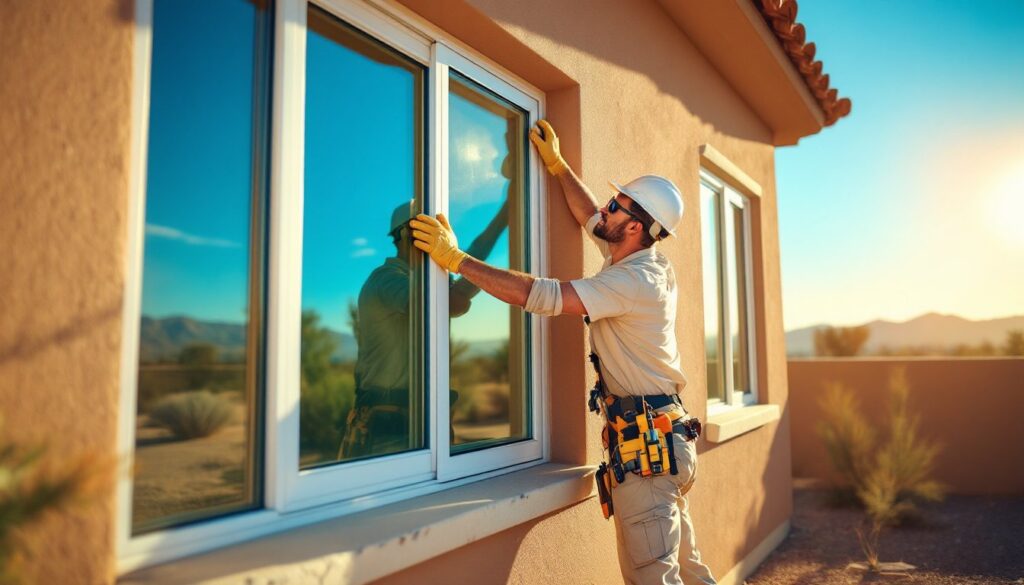
The actual replacement takes 1–3 hours per window depending on frame condition and trim work. A crew of two can typically handle 4–6 windows in a day. The process: remove interior trim, carefully pry out the old frame (wear goggles for broken glass), clean and prep the opening, install the new frame with shims to ensure it’s square and level, seal gaps with low-expansion foam, and reinstall or replace trim and caulk.
Safety gear is non-negotiable: safety glasses, work gloves, a dust mask (old frames may contain lead paint, test first in pre-1980s homes), and ear protection if using power tools for trim removal.
Timeline from order to installation is typically 2–4 weeks, depending on the manufacturer and window spec. If you’re replacing 8–10 windows, plan for 2–3 days of installation work. You can often operate normally: installers work section by section so your home isn’t wide open all day. Costs vary, a professional installation typically adds $50–$150 per window on top of the unit price. HomeAdvisor and similar platforms let you get quotes from local installers, which is worth doing to compare labor and warranty terms.
Maintenance Tips for Long-Lasting Windows
New windows aren’t maintenance-free, though they’re far easier than old wood frames. Clean the glass and frames twice a year with a soft cloth and mild soapy water, Phoenix dust and hard-water residue build up fast. Avoid abrasive scrubbers on low-E coatings: they can be damaged by harsh chemicals.
Check weatherstripping and caulk annually. Arizona’s temperature swings, though less extreme than other regions, still stress seals. Caulk around the exterior frame where it meets the wall should be intact and flexible. If it’s cracked or pulling away, reapply a fresh bead of exterior paintable caulk. Modern silicone or polyurethane caulks last longer than acrylic, plan to re-caulk every 5–10 years.
Keep the sill and weep holes (small drainage holes at the frame bottom) clear of debris. Standing water or clogged drainage leads to frame rot and hardware corrosion. If your windows have operable hardware (cranks, locks), a light application of silicone spray lubricant keeps them moving smoothly, don’t use oil, which attracts dust.
If you’re investing in window replacement, professional installation and proper warranty coverage through ImproveNet or certified local contractors ensures the job is done right. Many quality windows come with 10–20 year warranties on seals and mechanical parts: installer warranties often add another layer of protection.
Conclusion
Window replacement in Phoenix isn’t a cosmetic upgrade, it’s an energy and comfort investment shaped by the desert’s extremes. Identifying which windows truly need replacement, selecting the right materials and glass specs for your climate, and hiring installers who understand proper flashing and sealing will determine whether you’re looking at decades of reliable performance or another retrofit in a few years. Plan ahead, get quotes, and don’t skip the details.